 RelayDM
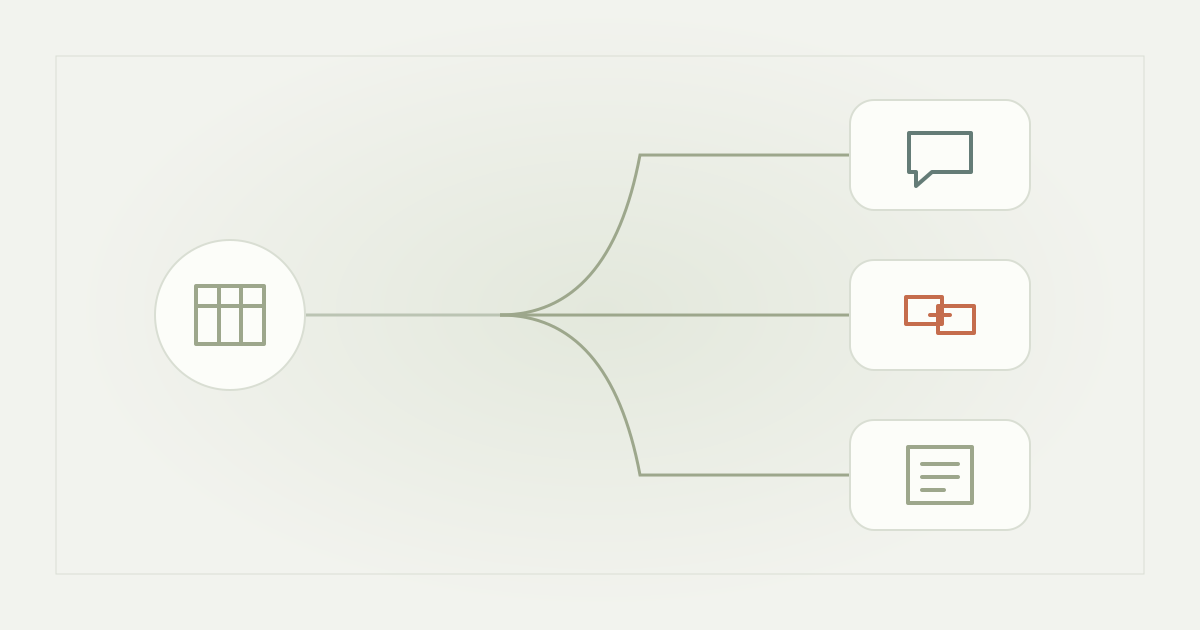
A follow gate and an email gate ask for different things and require different evidence. Following changes a platform relationship; sharing an email supplies contact information for a stated purpose. Neither should be added automatically just because it appears in a competitor’s funnel. Begin with the resource promise and the recipient’s reasonable expectation.
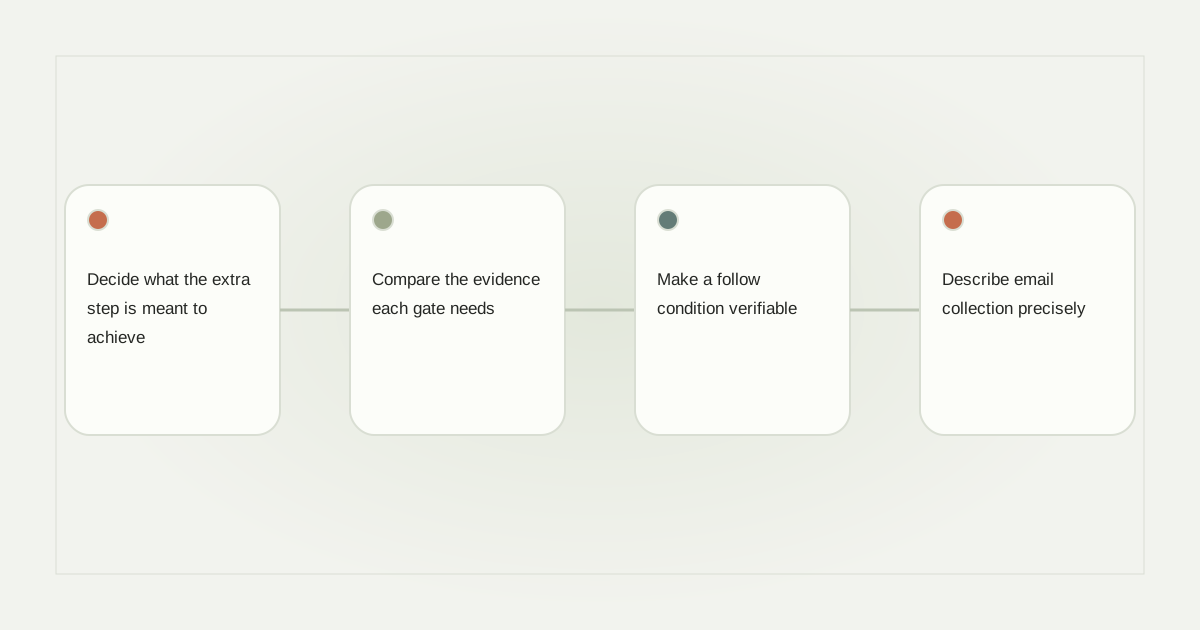
Decide what the extra step is meant to achieve
For a public recipe sheet, a creator may simply want to fulfill a request. Adding both a follow condition and an email form can turn a small task into an obstacle course. For a separate optional update list, an email request may have a clearer purpose.
Write the purpose in one sentence without mentioning conversion optimization. If the team cannot explain why the additional information or action is needed, leave it out or test a less demanding path. More steps do not automatically produce more useful relationships.
Compare the evidence each gate needs
| Step | Useful evidence | Insufficient evidence |
|---|---|---|
| Follow condition | Eligible fresh provider relationship check | A tap labeled “I followed” |
| Email collection | Submitted address, validation and stated purpose | A resource click |
| Future marketing | Appropriate separate permission or basis | A guide request alone |
Keep these decisions separate in storage and reporting. A single “unlocked” flag cannot explain whether the resource was released because of a verified follow, a contact submission or a manual exception.
Make a follow condition verifiable
Where supported, a recipient interaction can request a fresh follow-status check. The action itself is not the result. If the provider response is unavailable, expired or negative, the system must not claim a verified relationship.
Offer a clear explanation and an eligible recheck route. Do not send repeated follow requests automatically until somebody gives up. The follow-to-unlock guide should be read alongside the specific connection’s qualification, not used as a universal promise.
Describe email collection precisely
If email is optional, say so and preserve the skip path. If access truly requires an address, disclose that before the person begins rather than changing the offer after they request a free link. Explain what the address will be used for.
Validation can detect obvious formatting problems; it does not prove ownership or permission for unrelated campaigns. Decide who handles corrections, where the record is stored and how a person can ask for help. The email-after-link workflow provides a lower-friction alternative.
Evaluate quality instead of counting gates completed
A campaign report should distinguish requested resources, verified follows, valid contact submissions and meaningful enquiries. Do not count every step as a sale or assume that people who abandon a gate were unqualified.
Use a small, clearly defined evaluation with permitted interactions. Ask whether recipients understood the bargain, whether exceptions were handled and whether the resulting records served the stated purpose. The DM funnel guide helps organize those observations without inventing outcomes.
Choose only a genuinely supported configuration
Do not copy a preview containing buttons and assume the complete gated journey is qualified. RelayDM’s full current-connection advanced delivery acceptance remains separate from its baseline native-button evidence. Review current availability, preserve recipient-specific checks and omit an unnecessary gate when it cannot be supported honestly.
Sources and editorial notes
Source review: November 1, 2026. This is research-based guidance, not an independent hands-on test of every product. Prices and permissions can change.
Read our methodology, product-availability policy and corrections process.