 RelayDM
People may recognize an automated Instagram reply from its timing, wording or structure. The practical question is not how to hide automation perfectly. It is how to make the exchange useful, truthful and easy to leave. A requested guide can be delivered warmly without pretending that someone personally typed every message.
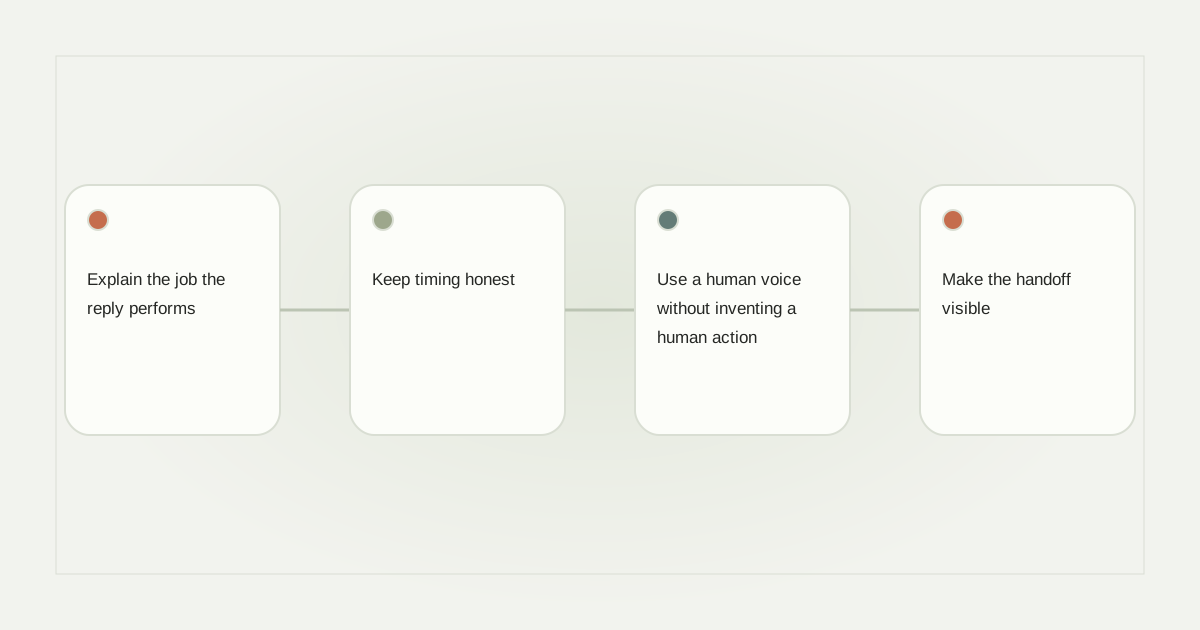
Explain the job the reply performs
A public invitation such as “Comment NOTES and our automated reply will share the checklist” sets a clear expectation. It describes the service instead of making the technology the main attraction. The recipient knows which action causes the response and what they should receive.
Avoid suggesting individual attention when the workflow is standardized. “I have selected this just for you” is misleading if every person receives the same file. “Here is the checklist you requested” is both simpler and more accurate.
Keep timing honest
Do not introduce artificial typing claims merely to imitate a human. A short operational delay may have a genuine technical purpose, but it should not become a false statement about who is reading or composing the message.
Likewise, avoid saying “I just checked your account” when no authorized check occurred. A system can report a verified status where that capability is genuinely supported, but a recipient action or a visually convincing preview is not proof of a provider lookup.
Use a human voice without inventing a human action
A message can say “Thanks for asking — hope this helps” without deception. Use straightforward language, a recognizable resource name and a clear action. Keep excessive personalization out when the necessary authorized information is unavailable.
Prepare a fallback for missing names and unexpected replies. The message should remain natural if the recipient’s display name is empty or contains unusual characters. Do not expose raw template variables such as a first-name placeholder in a real conversation.
Make the handoff visible
If a person can help, explain where and when that happens. For example, “For an order-specific question, use the support route on this page; the team checks it during business hours.” Only promise response times your operation actually supports.
A bot saying “One of us is here now” creates an expectation of live attention. If nobody is monitoring the conversation, use an honest alternative and ensure an unanswered question is not discarded because it fails a keyword rule.
Report success only when the evidence supports it
A public “Sent!” reply should follow the actual supported delivery process, not fire merely because a comment matched. If provider acceptance is uncertain, preserve the uncertainty and avoid making the customer search indefinitely for a message that may never have been sent.
Read the failure-stage guide for operational evidence and moderation versus replies for public communication. Transparency includes status wording, not just whether the greeting mentions automation.
Review the recipient experience as a whole
Ask whether the public promise, opening message, destination and help route tell one consistent story. A supported flow should feel easy because its steps are clear, not because its limitations are hidden. See welcome-style templates for examples. RelayDM’s current availability distinguishes configuration from public sending; no wording change removes those gates or guarantees a particular recipient outcome.
Sources and editorial notes
Source review: November 1, 2026. This is research-based guidance, not an independent hands-on test of every product. Prices and permissions can change.
Read our methodology, product-availability policy and corrections process.