 RelayDM
Follow to Unlock should mean that a platform-supported check established the recipient’s follow relationship before a resource was released. It should not mean that the person clicked a button labelled “I followed.” Build the workflow around evidence, freshness and a safe locked state when verification is unavailable.
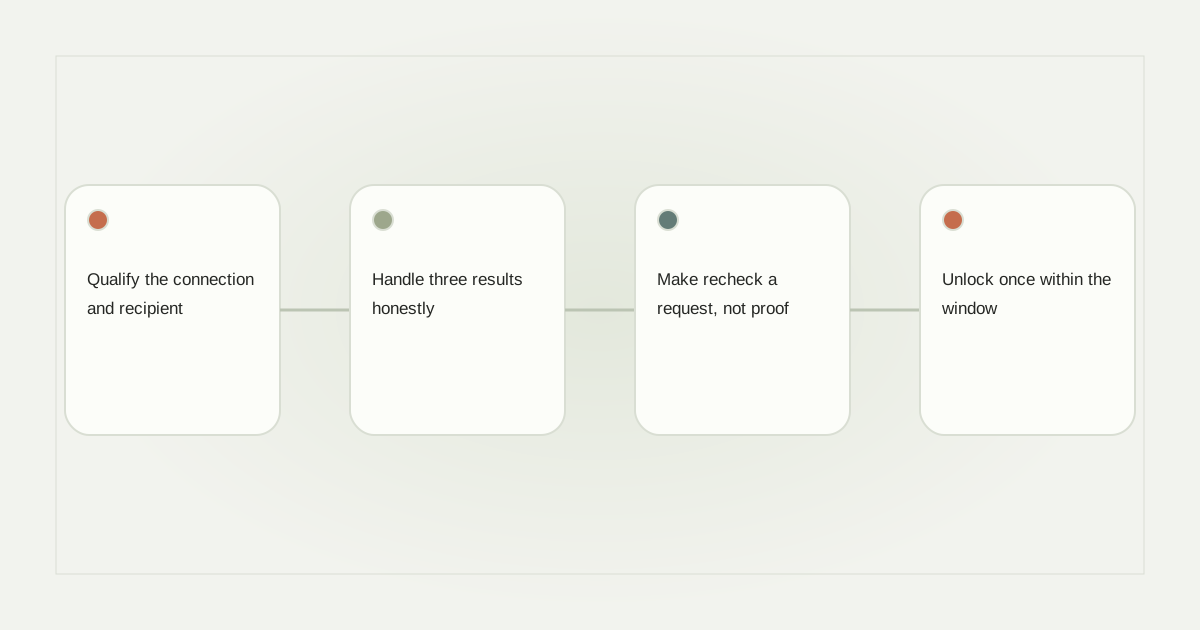
Qualify the connection and recipient
Meta’s User Profile API documentation includes the field is_user_follow_business in an eligible Instagram Login context. The ability to request it depends on permissions and legitimate recipient interaction. A username alone is not enough to establish the relevant recipient identity.
Connection qualification and recipient verification are separate. A successful lookup for one consenting recipient can establish a connection capability; it does not establish that every later recipient follows. Reconnecting an account also requires care: historical evidence must not be borrowed from a different account association simply because the username looks familiar.
Handle three results honestly
Design at least three outcomes: verified following, verified not following and unavailable. The last category includes permission, identity, expiry and provider errors. Treating unavailable as true defeats the gate; treating it as a confirmed nonfollow misrepresents the evidence.
For example, a sewing guide could remain locked after a genuine false result and show a polite invitation to visit the profile. If the provider is unavailable, explain that verification could not be completed and provide a human support route. Do not repeatedly send the same prompt while the failure remains unresolved.
Make recheck a request, not proof
A native “Check again” action should initiate a fresh authorized lookup. Its signed interaction establishes what the recipient asked, not their follow status. A URL action such as “Visit profile” serves another purpose and should not silently unlock the resource when clicked.
Use labels that make the next step clear. The initial prompt can offer “Visit profile” and “I’m following.” A later prompt can use “Visit profile” and “Check again.” Only formats actually supported and qualified for that message stage should be represented as deliverable.
Unlock once within the window
When a fresh eligible lookup returns true, deliver the intended resource once. Repeated button taps, duplicate webhook delivery or a late event must not create extra copies. Preserve the relationship between the recipient, current connection, automation and resource rather than treating a button label as a global command.
The messaging window still matters. A positive follow result does not reopen an expired conversation or authorize unrelated promotions. See messaging boundaries and private-reply stages before designing the sequence.
Test the failure path before launch
Review followed, nonfollowed, missing-consent, expired-token and repeated-interaction cases. A preview should show the intended journey without claiming that a genuine lookup occurred. Require actual provider evidence for qualification, and keep delivery restricted until its separate acceptance passes. Record the lookup time and outcome so a later operator can distinguish fresh evidence from an old result.
RelayDM has genuine profile-field evidence and configurable follow checks, but that is not proof of unrestricted customer Follow to Unlock delivery. Check current availability; never remove a valid sending gate just to make the toggle appear functional.
Sources and editorial notes
Source review: November 1, 2026. This is research-based guidance, not an independent hands-on test of every product. Prices and permissions can change.
Read our methodology, product-availability policy and corrections process.