 RelayDM
A welcome-style Instagram DM template describes a tone, not a universal trigger. You can greet someone warmly when they begin an eligible conversation or request a resource. Do not assume that following an account gives every integration permission to send an unsolicited welcome message, and do not present a template preview as evidence of that capability.
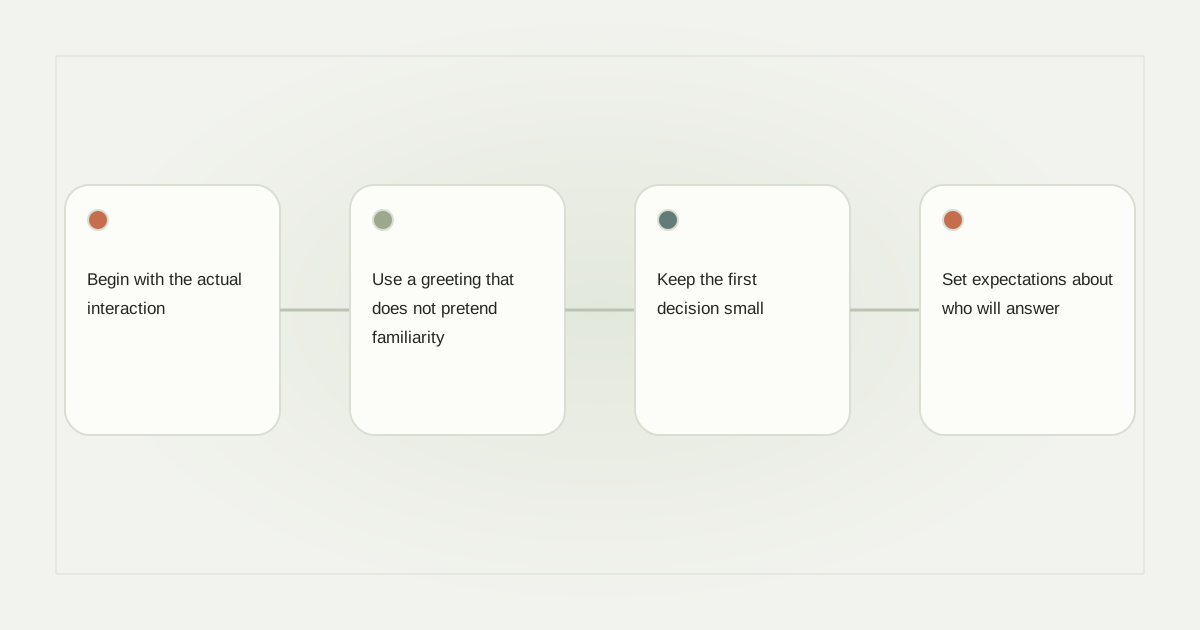
Begin with the actual interaction
A person who messages “Where is the workshop guide?” has supplied useful context. A response can say “Welcome! Here is the workshop guide you asked about.” Someone who only follows the account has performed a different action. Build the workflow around the evidence the tool actually receives.
Before writing the greeting, name its trigger in plain language: incoming question, eligible reply action or another documented interaction. If the trigger cannot be described and verified, the opening copy is not ready for an automated launch.
Use a greeting that does not pretend familiarity
A useful template is “Hi — thanks for getting in touch. Which guide are you looking for?” Another is “Thanks for requesting the recipe sheet. Use the link below to open it.” Both are friendly without implying that a person individually researched the recipient.
Avoid “I was just looking at your profile” unless that is an honest human statement in the actual conversation. Automated personalization should use authorized, available information with an appropriate fallback. A missing name should not produce an awkward placeholder or somebody else’s identity.
Keep the first decision small
Offer one meaningful next action. If the person asked for a guide, fulfill that request before introducing a large menu of services. If their intention is unclear, ask a short clarifying question rather than guessing from their follower status.
For example, a bakery might ask “Are you looking for the cake-size guide or ordering information?” Those two options represent genuinely different tasks. A general welcome message that opens five unrelated promotions is harder to understand and harder to evaluate for the proper messaging context.
Set expectations about who will answer
If a person will review unanswered questions later, give an accurate response expectation. “The team checks questions during opening hours” is better than “We are always here” when no one monitors the inbox overnight. An automated acknowledgment is not the same as staffed support.
Use a clear handoff when the recipient asks something outside the resource flow. Do not keep repeating the greeting because the answer does not match a keyword. Preserve their question, stop the inappropriate branch and make responsibility visible to the team.
Check permission at each stage
Meta’s messaging documentation defines the relevant interaction and time constraints. An earlier message does not permit an unlimited future sequence. The system needs to enforce the actual account context and recipient eligibility immediately before any send.
See Instagram messaging limits, inbound permission versus cold outreach and requested-resource templates for separate design decisions. Do not turn a warm voice into a claim that platform restrictions disappear.
Treat the template as one component
Review missing information, unexpected replies and the person who wants no further help. The right result may be a polite end to the exchange. RelayDM’s current public customer sending remains gated, and its trial is not a permanent free plan. Review actual availability before selecting a welcome-style workflow for production.
Sources and editorial notes
Source review: November 1, 2026. This is research-based guidance, not an independent hands-on test of every product. Prices and permissions can change.
Read our methodology, product-availability policy and corrections process.