 RelayDM
Instagram property comment replies need to distinguish a request for information from confirmed availability. A person asking for a brochure has not reserved a unit, agreed to a viewing or supplied permission for unrelated contact. Keep public responses short and send detailed information through an appropriate, clearly described route.
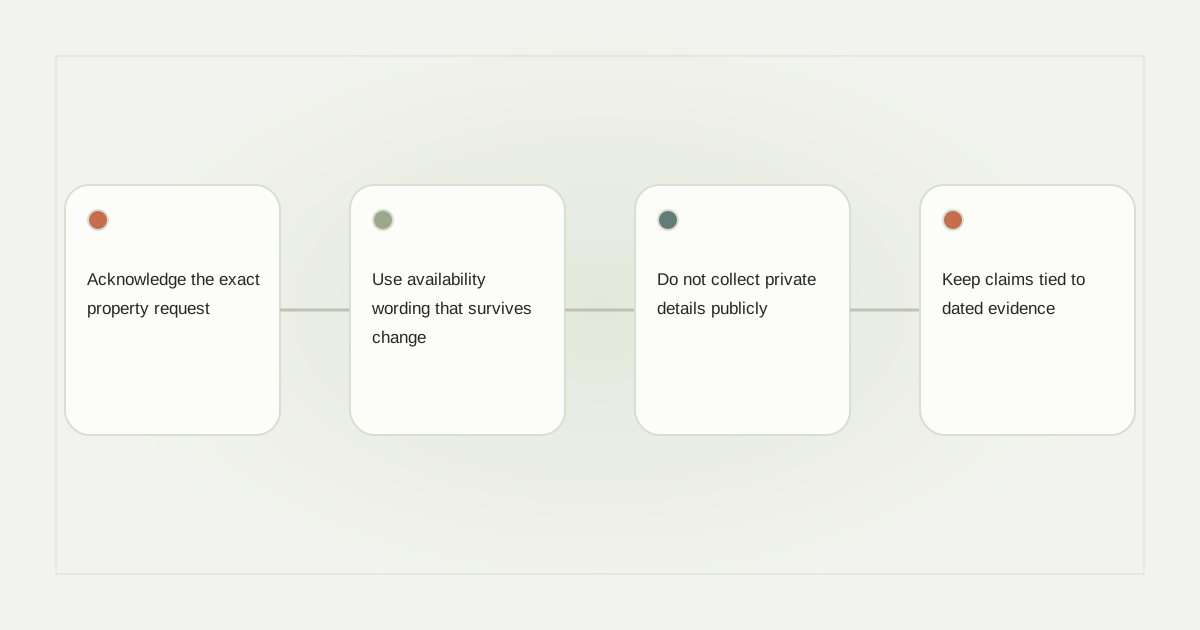
Acknowledge the exact property request
Imagine a Reel showing a two-bedroom apartment. A commenter writes BROCHURE. A useful response identifies the information: “Thanks — the requested brochure covers the apartment shown in this Reel.” Add delivery confirmation only when the system has evidence to support it.
Avoid “Your apartment is waiting” or “Guaranteed availability.” A public comment cannot establish a reservation. If several listings appear in one post, ask which one the person means or use a landing page that clearly distinguishes them before collecting an enquiry.
Use availability wording that survives change
For an active listing, an example is “The linked page has the latest details; availability is confirmed by the agent.” For a listing under offer: “This property is under offer. The page explains the current status.” For a sold listing: “This listing has sold; please contact the team if you want information about other properties.”
These are separate states, not interchangeable variations. Assign somebody to update the post, resource page and automation when status changes. A brochure saved months ago may remain in circulation after a property is no longer available.
Do not collect private details publicly
A reply asking “What is your income and phone number?” exposes information that does not belong in a comment thread. If a person wants a call, direct them to a private form or human contact route that explains the next step.
Do not repeat a commenter’s budget, family circumstances or earlier private messages in your response. Even a familiar customer may not expect those details to appear under a public Reel. Keep qualification separate from a simple request to see floor plans or a brochure.
Keep claims tied to dated evidence
Use the property’s approved information source for price, location, features and charges. Do not let a reusable template invent a price reduction, financing option or investment return. If the content is illustrative rather than a real listing, say that clearly.
A practical review record includes listing reference, page URL, approved wording, last review date and the person responsible for updates. When a claim changes, update the authoritative destination rather than hoping a generic “details subject to change” line repairs every outdated message.
Choose a handoff for questions a template cannot answer
A buyer may ask about accessibility, ownership terms or viewing arrangements. These questions deserve a qualified response, not a different keyword prompt. An example public reply is “Our agent can check that specific point; please use the enquiry route on the listing page.”
See private property information templates for brochure delivery, and moderation versus replies for handling complaints or uncertain comments. Keep a visible owner for unanswered enquiries.
Review before any launch
Check sold-property behavior, the correct listing association, duplicate comments and an unavailable destination. The public-reply workflow explains the operational distinction from private messaging. Review RelayDM’s actual availability separately: this editorial copy does not establish that customer-wide automated sending is enabled or that a property claim is approved.
Sources and editorial notes
Source review: November 1, 2026. This is research-based guidance, not an independent hands-on test of every product. Prices and permissions can change.
Read our methodology, product-availability policy and corrections process.