 RelayDM
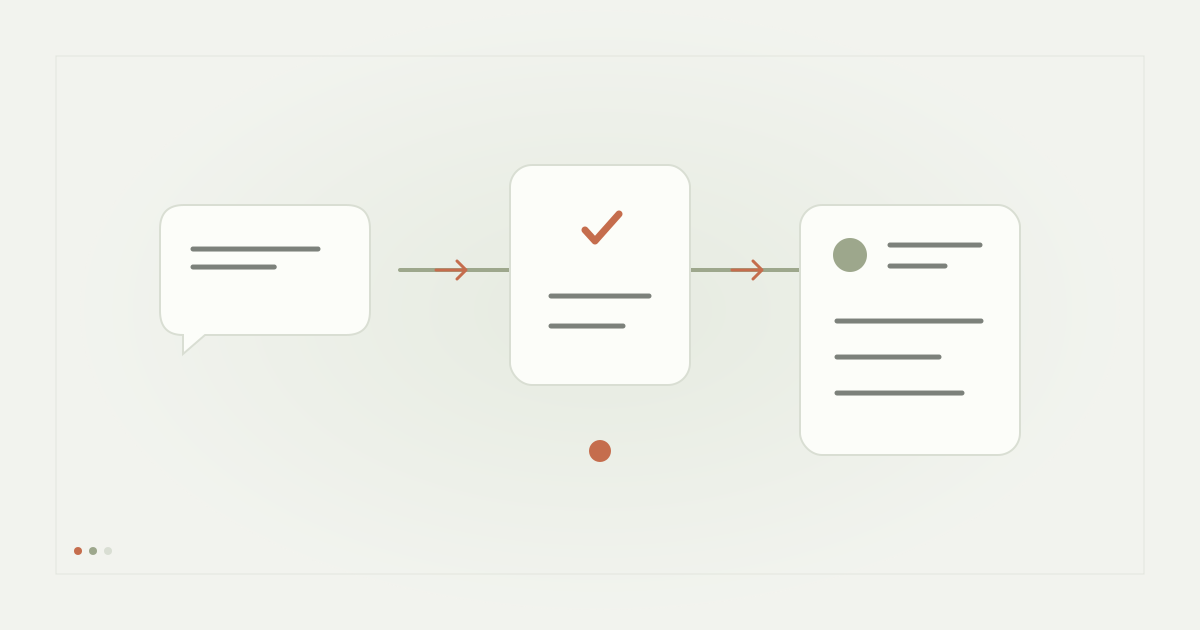
Asking for an email after an Instagram link can keep the original resource promise straightforward. Deliver the requested material first, then offer a clearly described optional next step when the messaging context permits it. The address should serve an understood purpose, not become a surprise condition for a link already promised.
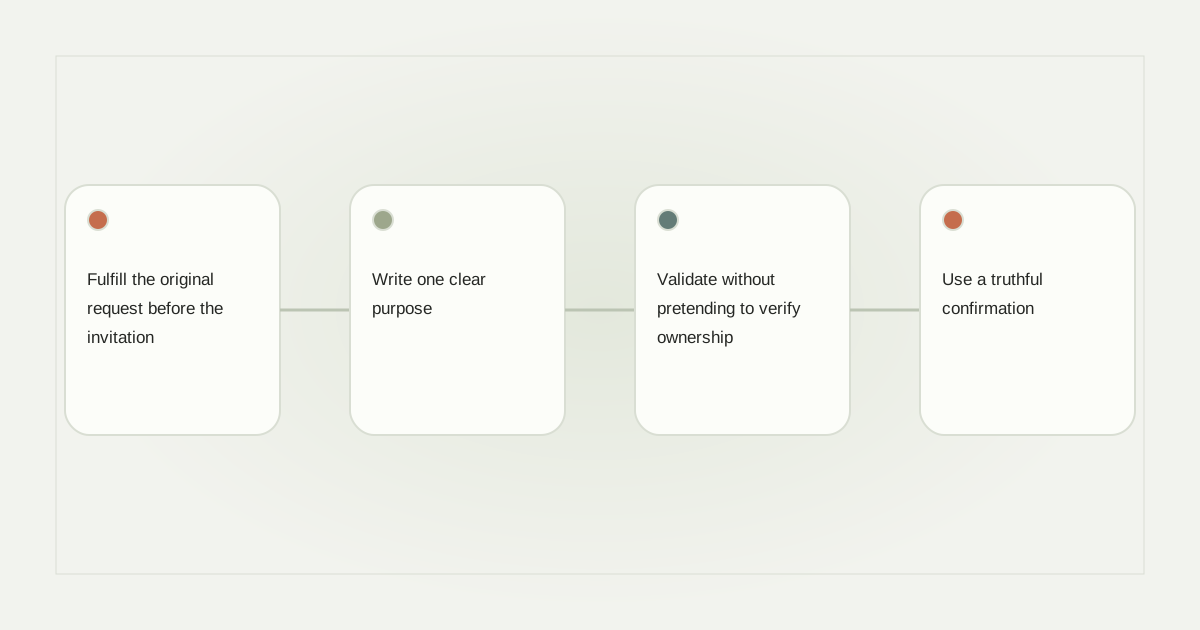
Fulfill the original request before the invitation
Suppose a designer offers a portfolio review checklist. The recipient opens the checklist through a supported resource button. A later optional question might be “Would you like the next worksheet by email, or would you prefer to skip?” The resource remains available either way.
Do not label the resource as delivered if the destination failed. First handle the broken link or access problem. Asking for more contact information while the original promise remains unfulfilled makes the exchange feel like a changing bargain.
Write one clear purpose
An example prompt is “If you want this worksheet emailed to you, reply with your address. Reply SKIP if not.” If the purpose is future marketing rather than delivery of a requested file, explain that separately and use the appropriate consent process for your operation.
Avoid vague promises such as “Enter email to unlock everything.” Describe what happens next, who sends the email and whether there is any ongoing subscription. A saved address alone does not prove that the person understood every possible future use.
Validate without pretending to verify ownership
Check obvious formatting and length problems before saving a contact field. If the input looks like a question rather than an address, preserve the question and provide an understandable correction path. Do not repeatedly demand an address after a clear skip or decline.
Formatting validation is not mailbox verification. Decide whether a confirmation process is needed for the stated purpose, and do not report a “verified subscriber” merely because the string contains an at sign. Keep the distinction visible to staff who export or use the records.
Use a truthful confirmation
A suitable confirmation might be “Your address is saved for the worksheet request.” Only say that an email was sent if the actual email system has evidence supporting it. Instagram contact capture and email delivery are separate operations.
If a downstream system is unavailable, explain the actual status without exposing technical details. Do not keep prompting the recipient to submit again when their address is already stored; that can create duplicates and conflicting records.
Give the record a responsible home
Store only the fields needed for the declared purpose and restrict access appropriately. Keep the prompt version, submission time and source campaign where useful. Avoid including contact data in tracking URLs, screenshots or general-purpose analytics.
Use the CRM workflow checklist for transfers, and the lead-capture guide for purpose and field design. If the person later corrects an address or withdraws interest, the responsible team should know which systems need attention.
Check permission and product scope
Every follow-up question still needs a valid messaging context; resource delivery is not unlimited future contact permission. Read follow gates versus email requests before adding friction. RelayDM’s email-after-link configuration does not by itself prove its complete live journey is qualified. Check current availability and preserve sending restrictions until genuine acceptance exists.
Sources and editorial notes
Source review: November 1, 2026. This is research-based guidance, not an independent hands-on test of every product. Prices and permissions can change.
Read our methodology, product-availability policy and corrections process.