 RelayDM
An Instagram DM-to-CRM automation is a data-handling workflow, not merely a connector switch. Start by deciding what a team needs to remember about a requested conversation. Then choose the smallest reliable transfer process. This guide is an implementation checklist; it does not claim that RelayDM currently provides a particular CRM integration.
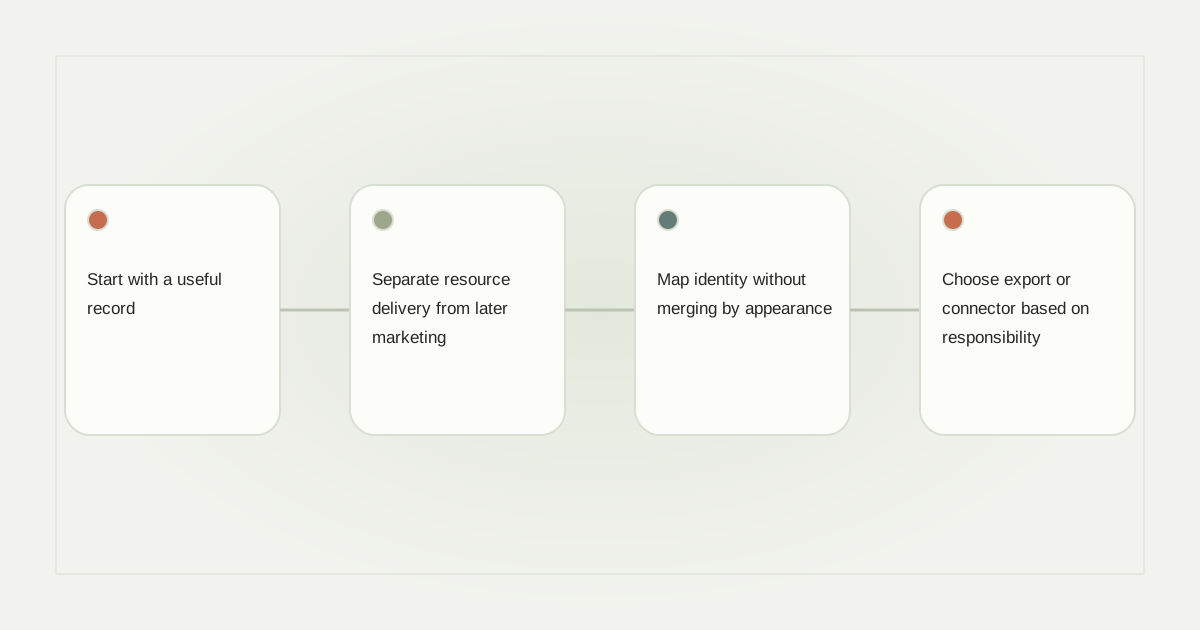
Start with a useful record
Consider a language tutor who offers a placement worksheet. The team may need a contact address supplied voluntarily, the requested worksheet, preferred class format and a handoff status. It probably does not need an unlimited transcript of every conversation copied into a marketing database.
Write a field dictionary before connecting systems. For each field, record its meaning, source, purpose and who may edit it. “Interested” is vague; “requested beginner worksheet on November 1” explains what happened without pretending the person agreed to a sales call.
Separate resource delivery from later marketing
A request for a worksheet does not automatically express permission for every future email campaign. Keep the resource request, contact submission and any separate marketing preference distinguishable. Show a clear question and a genuine skip path where email is optional.
Store the wording or version of the prompt with the resulting choice. A CRM checkbox labeled “consent=true” is weak operational evidence if nobody can explain which purpose was described. Discuss the appropriate notice and legal basis with the people responsible for your business, rather than treating a software field as compliance.
Map identity without merging by appearance
Do not merge records merely because two people share a display name or an address resembles an existing entry. Define a deliberate duplicate-review process and preserve the original source reference. Instagram-scoped identity belongs to its authorized messaging context; it is not a universal CRM identifier.
When a customer corrects an address, retain enough audit context to understand the correction without spreading the obsolete address into more systems. Assign one system as the operational owner of each field, especially when staff can edit both the inbox and CRM.
Choose export or connector based on responsibility
A supervised CSV export can be safer than an unattended integration that nobody monitors. Conversely, frequent handoffs may justify a connector if it supports access control, failure visibility and duplicate prevention. Document who owns either process.
For an automated transfer, distinguish “received by the connector” from “saved in the CRM.” An interrupted request must not generate multiple leads when retried. Use a stable event reference, a visible exception queue and an explicit reconciliation procedure instead of repeatedly pressing an import button.
Test correction, withdrawal and staff access
Create synthetic records in a permitted test environment. Verify a missing optional email, a corrected contact address, a duplicate submission and a failed CRM request. Check that staff in an unrelated workspace cannot view or export the record.
Trace what happens when a person asks to stop further contact or remove their information. A deletion in one interface may not remove an export, backup or downstream system. Keep a system inventory and a documented owner for requests; do not promise an automated deletion path you have not tested.
Use the CRM to support a human response
A helpful handoff says what the person requested and what remains unanswered. It should not imply that a lead score is a purchase commitment. Read lead-capture design, resource funnel planning and comment-based lead generation before choosing fields. Check RelayDM’s current availability separately from any proposed connector.
Sources and editorial notes
Source review: November 1, 2026. This is research-based guidance, not an independent hands-on test of every product. Prices and permissions can change.
Read our methodology, product-availability policy and corrections process.