 RelayDM
Instagram automation for digital-product sellers should distinguish a requested sample from a paid product. Sending a link is not verifying a purchase, and a comment is not proof of entitlement. Decide which resource can be public and which access requires authoritative checkout evidence before designing the conversation.
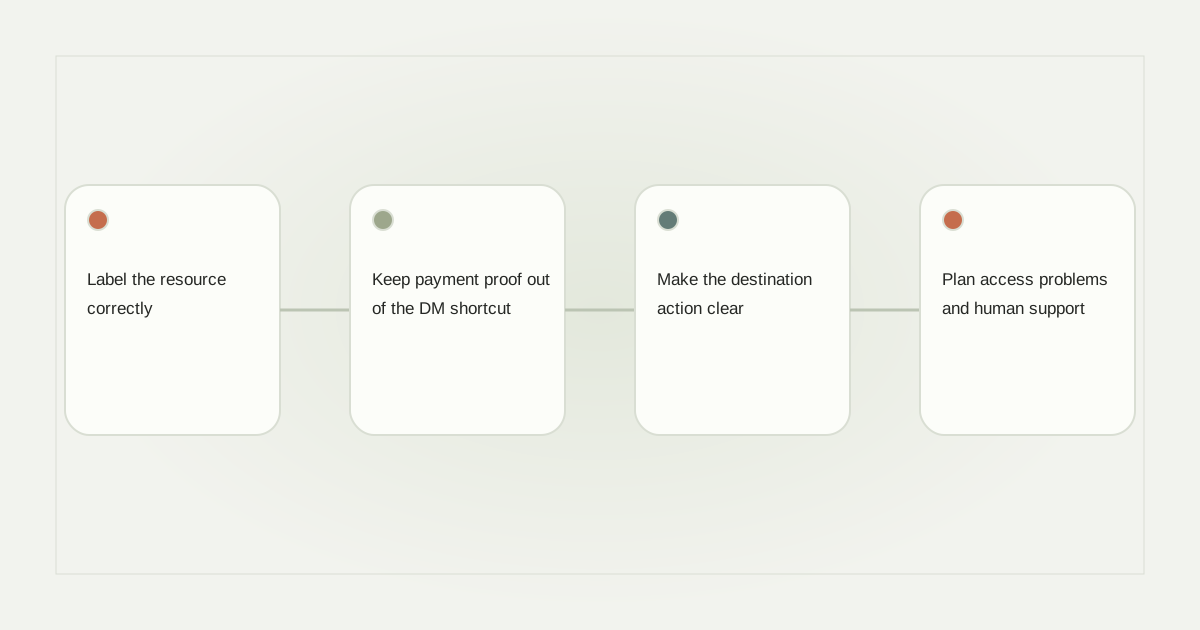
Label the resource correctly
A template seller might offer a free invoice sample while selling a complete business pack. The caption and message should name the sample clearly. Do not show the complete pack in the invitation and deliver only a preview without explaining the difference.
Write a resource inventory containing its purpose, destination, access requirements and owner. Check file permissions while signed out. If a public sample contains a link to purchase the full product, make that transition obvious rather than disguising it as a download button.
Keep payment proof out of the DM shortcut
A recipient saying “paid” or sharing an unverified screenshot should not automatically release a protected product. Use the actual commerce system’s verified payment and order evidence. Keep customer identity, order association and access control in that system rather than constructing a new entitlement from a chat keyword.
This guide does not prescribe a particular payment architecture. The practical boundary is simple: resource delivery can guide a customer to checkout, while secure fulfillment must establish the genuine purchase. Do not ask people to paste card details, passwords or one-time codes into Instagram.
Make the destination action clear
Label a free sample action “Open sample template” and a sales action “View full pack.” A native URL button should open the intended validated destination. A tracking redirect can measure a request, but it does not establish that the person purchased, downloaded or successfully used the file.
For a hypothetical design pack, test the sample on mobile and confirm that its licence or usage instructions are easy to find. Avoid promising universal compatibility if the file requires a specific application. Keep changeable product details on the maintained destination page.
Plan access problems and human support
Decide what happens if someone cannot open the file, purchased under a different email or asks for a refund. Those are support tasks, not reasons to send another unrestricted copy automatically. Give the person a safe channel and request only the reference needed for investigation.
Preserve the distinction between an accepted Instagram message and fulfilled product access. Meta’s private-reply rules govern how a comment-started conversation proceeds; they do not replace the seller’s purchase and access checks.
Measure sample and sale separately
Report sample requests, resource visits, checkout activity and verified purchases as separate stages. A person may request the sample without buying, and that is not necessarily a failed automation. Use the evidence to improve the product explanation rather than inventing conversion claims.
Read resource planning and analytics definitions before launch. RelayDM’s Builder can prepare this journey, but general customer sending remains gated and its billing plans do not constitute a digital-product storefront. Check current availability before assuming that configuring a URL button enables customer delivery or payment fulfillment.
Sources and editorial notes
Source review: November 1, 2026. This is research-based guidance, not an independent hands-on test of every product. Prices and permissions can change.
Read our methodology, product-availability policy and corrections process.