 RelayDM
RelayDM versus InstantDM is a workflow decision, not a race to claim the fastest reply. Review the trigger, interaction, resource action and support responsibility you need. This is a RelayDM-authored comparison based on official public material; we have not performed a comparative speed or reliability benchmark.
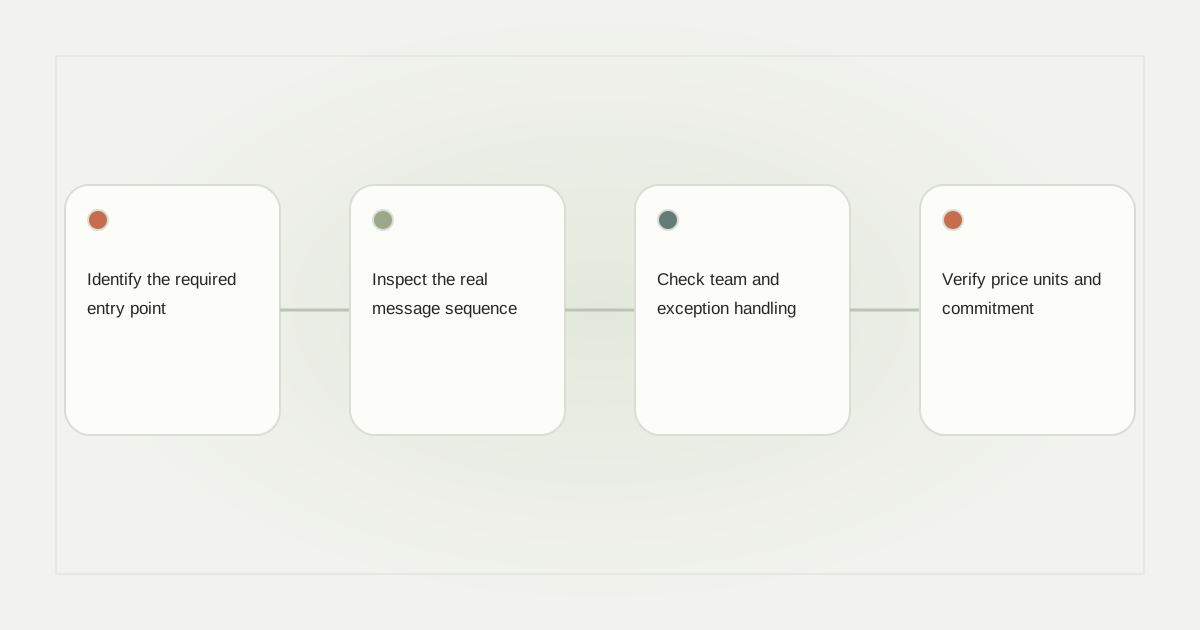
Identify the required entry point
InstantDM’s official website describes comment and DM automation alongside broader capabilities. Treat that as a shortlist starting point, then verify the exact feature and account context. A homepage illustration does not establish that every trigger works with every connection.
Write a concrete task, such as delivering a workshop outline after a specific Reel comment. If you also need Story or live-stream behavior, list those separately. Do not buy a broader package merely because it contains more labels than your campaign requires.
Inspect the real message sequence
For the workshop task, map an opening, a supported recipient action and a resource message. Ask how a native reply action is received and which destination the URL button opens. A successful redirect alone does not prove that Instagram displayed the intended message.
RelayDM has genuine bounded text and native-button acceptance, but general customer sending remains restricted. Meta’s private-reply rules constrain the journey regardless of a vendor’s visual editor. A meaningful evaluation must include account eligibility and actual interaction evidence.
Check team and exception handling
A creator working alone may only need a clear queue of exceptions. A small team may need assigned conversations, distinct permissions and an audit trail. Define the work before comparing seat counts or agent terminology.
Consider a recipient who asks whether a workshop suits a beginner rather than pressing the resource action. Who receives that question, and does automation stop while a human answers? Ask about this case directly. A well-rendered resource button is not a complete customer-support process.
Verify price units and commitment
Inspect InstantDM’s current official pricing offer and its billing cadence rather than reproducing a dated promotional number. Determine how the product defines usage and any stated limits. Marketing language such as unlimited should be read alongside the actual terms, account scope and platform restrictions.
RelayDM’s eligible trial lasts seven days and is not a free-forever plan. Public qualified UPI trial checkout does not establish recurring-card, eMandate, Dodo Live or returning-paid availability. Keep those restrictions visible when comparing the cost of a workflow you need today.
Use a common acceptance sheet
Score each candidate against the same evidence: correct trigger received, intended recipient interaction, rendered resource action, no duplicate send, understandable activity and a functioning stop control. Leave a row unknown if you cannot verify it. Keep the date, account context and relevant evidence with each completed row so another operator can repeat the evaluation without guessing what was tested. Do not replace missing evidence with a testimonial or a preview.
Use the safety checklist and measurement definitions to keep the evaluation consistent. Check RelayDM’s current availability before committing. The decision should follow the supported task and operational fit, not an unmeasured claim that one product is faster.
Sources and editorial notes
Source review: November 1, 2026. This is research-based guidance, not an independent hands-on test of every product. Prices and permissions can change.
Read our methodology, product-availability policy and corrections process.