 RelayDM
Choosing between RelayDM and CreatorFlow should start with the lead record you need, not just the appearance of a DM preview. A resource request, optional contact detail and export are separate stages. This comparison is written by RelayDM and uses public product information, not an independent performance test.
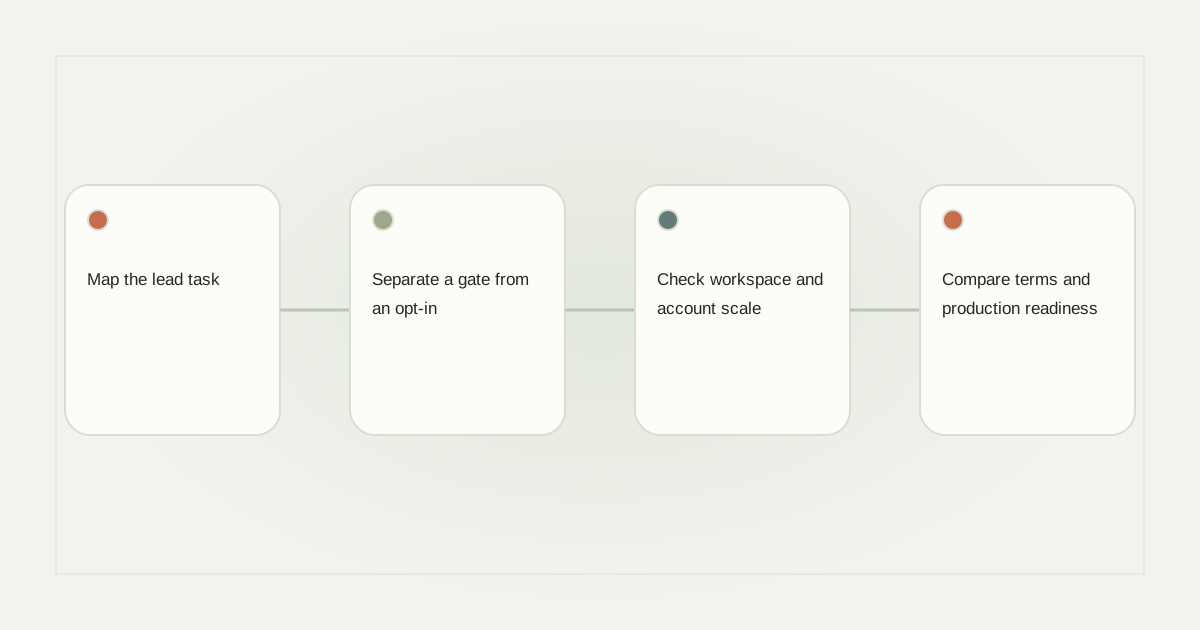
Map the lead task
Suppose a language tutor offers a sample lesson. The person first requests the lesson, then may choose an email copy. The useful record includes which lesson was requested and what contact use was actually agreed. A spreadsheet containing bare email addresses loses that context. Define those columns before evaluating an export button.
CreatorFlow’s official pricing page lists resource automation, lead-related features and different account/usage allowances. Verify which tier includes the particular collection and export task you need. A feature appearing in a comparison table is not proof that it is available in every free or paid configuration.
Separate a gate from an opt-in
An email gate asks for information before access. An optional email-after-link prompt lets someone receive the resource and separately provide a detail. Those designs have different expectations. Your caption, privacy notice and actual sequence should all describe the same arrangement.
RelayDM represents email-after-link configurations and must preserve its mandatory collection notice. Do not silently turn that into a newsletter signup or a precondition the creator never disclosed. Check how each product stores the purpose and supports a skip choice before comparing lead totals.
Check workspace and account scale
CreatorFlow publishes allowances across plans; inspect the current account, workspace and usage wording carefully. Ask whether an allowance is shared or separate, how staff access works and what happens at the limit. Do not substitute the number of followers for a conversation forecast.
For a teacher running one brand and an agency running several clients, the same advertised feature may involve very different access needs. Review the client boundary and export permissions. Data belonging to one account should not become visible to another merely because an operator manages both.
Compare terms and production readiness
Read the official monthly or annual offer, trial requirements and cancellation route. CreatorFlow’s published free option and paid trial are distinct offers; RelayDM has a seven-day eligible-account trial, not a permanent free plan. Do not describe one trial period as an equivalent free tier.
RelayDM’s public qualified financial path is UPI trial checkout. Other payment paths and general customer sending remain gated. A saved lead-capture draft therefore does not demonstrate public live collection. Compare what you can execute now, not an unreleased roadmap.
Evaluate one complete export
Where authorized testing is available, evaluate one resource request, one optional field submission and the resulting record. Check the correct account, timestamp, campaign context and permission. Verify a declined collection does not become a fabricated lead, and that the resource promise remains accurate.
Our lead-capture guide defines those checks; funnel planning keeps the offer coherent. Consult RelayDM availability before purchasing. The better fit is the product whose currently supported collection behavior matches your actual purpose and operating responsibilities.
Sources and editorial notes
Source review: November 1, 2026. This is research-based guidance, not an independent hands-on test of every product. Prices and permissions can change.
Read our methodology, product-availability policy and corrections process.