 RelayDM
Instagram coupon delivery works best when the terms are defined before the DM. A discount code without an expiry, eligible products or a working checkout can create more support work than value. Treat the automation as a way to communicate an approved offer, not as the system that invents or overrides your store’s pricing rules.
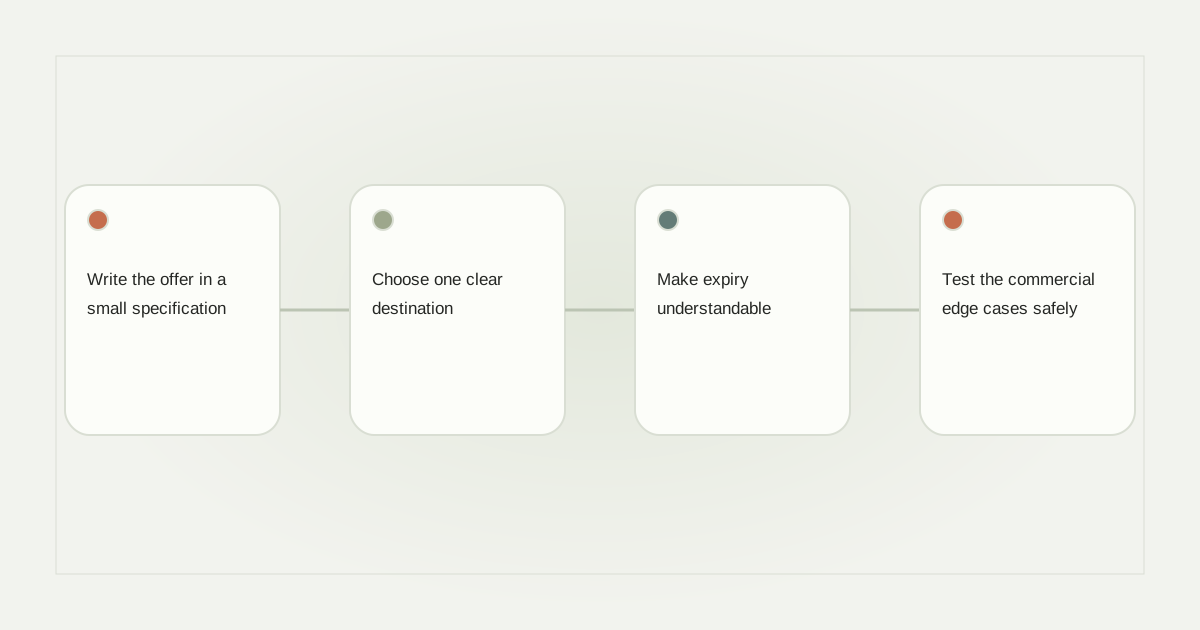
Write the offer in a small specification
For an illustrative stationery campaign, define the code, eligible collection, minimum spend if any, start and end time, exclusions and whether the code can combine with other offers. Have the person responsible for the store confirm those terms.
Keep the offer’s wording consistent in the Reel, resource message and destination page. “Ten percent off selected notebooks through Sunday” is different from “Ten percent off everything.” An automated message should not broaden the commercial promise because a shorter sentence looks cleaner.
Choose one clear destination
Send the recipient to the relevant collection or an offer page that explains the terms. A URL button labeled “View notebook offer” tells them more than a generic “Get access.” Test the full destination, including any redirect, on a small phone.
If the store supports applying a code through a URL, verify the actual behavior before using it. Do not assume that a parameter silently discounts a cart. The checkout’s displayed amount and terms are the relevant customer evidence.
Make expiry understandable
State the date and timezone when timing matters. “Ends tonight” becomes ambiguous when a message arrives late or a recipient lives elsewhere. An offer page should clearly handle expired codes rather than leaving old recipients to discover the problem only at payment.
A practical timeline has three states: not yet active, currently available and expired. Assign an owner to update the automation or destination at each boundary. Do not revive an old promotion automatically because a new comment arrives under an old post.
Test the commercial edge cases safely
Use the store’s permitted test process to check excluded items, insufficient spend, already-discounted products and an expired code. Verify that the displayed total matches the approved offer. Do not create real purchases merely to check a message template.
Prepare a human help route for a legitimate customer whose code fails. The automation should not repeatedly send the same coupon as if repetition repaired the store configuration. A support record should identify the campaign and terms without collecting payment credentials.
Measure redemption separately from interest
Comments and link requests show interest, not successful coupon use. Count actual redemption from the store’s authoritative order or discount records when available. If you cannot join those records responsibly, keep click and redemption totals separate.
The attribution guide explains why redirects are not sales. For product context, read product-link accuracy and free versus paid access before writing a stronger commercial claim.
Keep the messaging promise narrow
An eligible requested coupon message is not authorization for an indefinite promotional sequence. Use the comment-to-link workflow and review RelayDM’s actual availability. Its catalog and Builder do not remove sending gates, and this example does not change any real product price, subscription or payment method.
Sources and editorial notes
Source review: November 1, 2026. This is research-based guidance, not an independent hands-on test of every product. Prices and permissions can change.
Read our methodology, product-availability policy and corrections process.