 RelayDM
Instagram automation for tutors can answer basic course questions without collecting a student’s private educational history. A syllabus, sample lesson or enquiry page often resolves the first request. When children may be involved, design the route with an appropriate parent or guardian boundary instead of treating every DM as an adult sales lead.
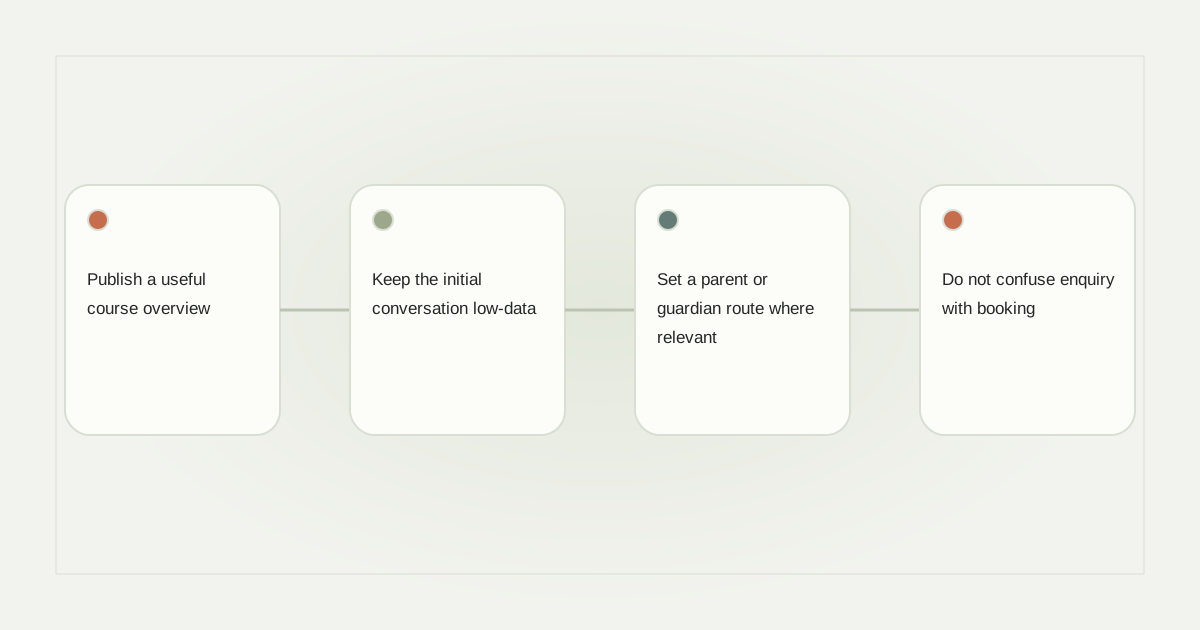
Publish a useful course overview
For a beginner language class, the resource might explain level, format, session length and the intended audience. “Comment BEGINNER for the course overview” is a specific promise. The page should clarify whether it is a sample, a paid course or an invitation to enquire.
Keep timetable and enrollment information current. An old Reel should not promise a place in a group that is already full. If the next class is not scheduled, state that rather than automatically confirming availability. Instagram DM automation for tutors should support accurate information, not create fictional seats.
Keep the initial conversation low-data
A supported opening reply can offer the overview after the appropriate recipient interaction. Do not ask for school records, grades, identity documents or a child’s full contact details as part of receiving a public sample lesson. The resource should not require unnecessary personal disclosure.
If the person needs a placement discussion, hand off to the tutor’s established enquiry process. Ask only what is needed at that stage, such as the broad course level and preferred contact route. Explain who will receive the information and why.
Set a parent or guardian route where relevant
A service working with minors should decide how adult involvement is handled before running the campaign. Use an appropriate registration or consultation process rather than inviting children to share private circumstances in an automated Instagram exchange. Applicable obligations depend on the service and location.
An Instagram chatbot for tutors cannot determine age, parental authority or educational needs merely from a username. Avoid turning uncertain profile information into an automated eligibility decision. Staff should be able to stop the flow and explain the appropriate next step.
Do not confuse enquiry with booking
When a tutoring enquiry moves toward booking, send the person to the actual calendar or enquiry system. A request is not a confirmed lesson. Describe trial lessons, deposits, cancellation conditions and course fees on the maintained booking page, not only in an old message.
For tutors selling courses, distinguish a self-paced purchase from a live teaching slot. Each has different fulfillment and support requirements. A resource button can lead to either destination, but its label should describe what the user will find.
Review access and the full draft
Test a matching keyword, a nonmatching comment, a full class and a recipient who declines to provide further details. Confirm that staff receive enquiries through the intended channel and that private student information does not appear in public replies or shared analytics.
RelayDM currently permits preparation of these configurations while general customer sending remains gated. A seven-day introductory subscription trial is not a free teaching programme. Check actual delivery availability and keep individual education advice with the responsible tutor.
The course information page should also explain who can answer accessibility or format questions. A learner asking whether captions or alternative materials are available needs an accurate answer, not a sales script. Do not claim those accommodations exist until the tutor has confirmed the actual teaching arrangement.
Use the expertise-to-enquiry workflow and minimal contact collection guide. See current RelayDM terms for software access.
Sources and editorial notes
Source review: November 1, 2026. This is research-based guidance, not an independent hands-on test of every product. Prices and permissions can change.
Read our methodology, product-availability policy and corrections process.