 RelayDM

Instagram automation for travel businesses should distinguish inspiration from a bookable offer. An itinerary can help someone explore a destination without proving that flights, rooms or activities are available at a quoted price. The first automated exchange should deliver the promised information, then route time-sensitive or personal arrangements to the responsible booking team.
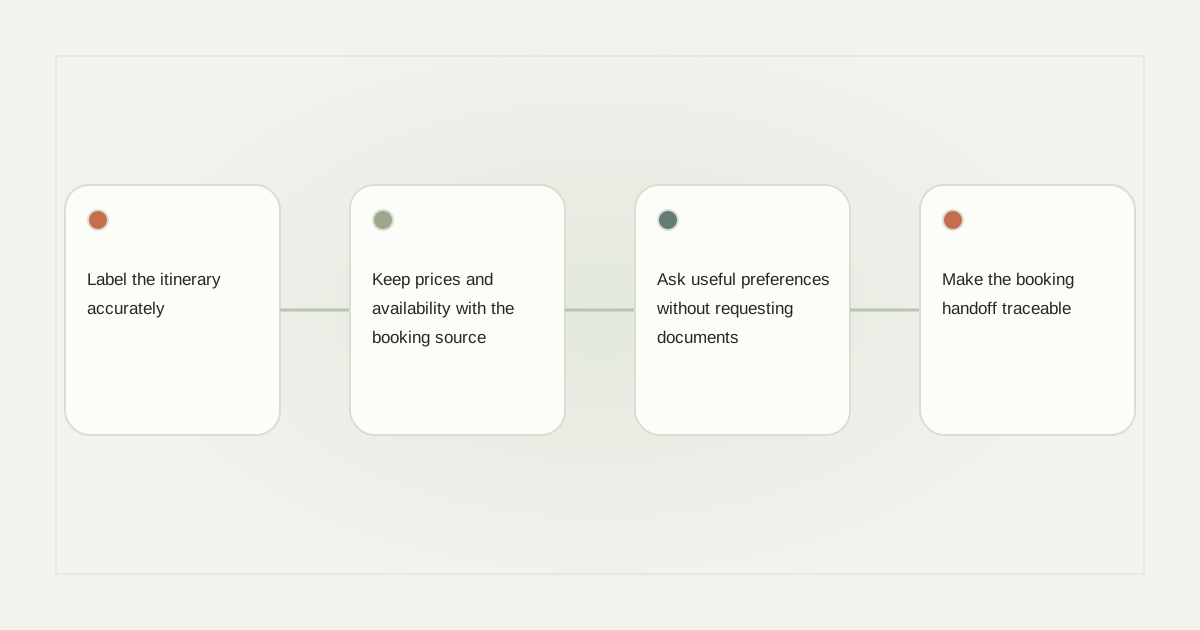
Label the itinerary accurately
A mountain-tour Reel could offer a sample three-day itinerary. State whether it is illustrative, a current package or a past trip. Include the season, starting point and major exclusions on the linked page. Avoid letting an attractive resource look like a guaranteed departure.
Use a destination-specific keyword such as HILLS and bind it to the correct post. If two tours share a name, add enough context in the opening reply for the person to recognize the trip. Comment automation for travel businesses needs careful destination ownership, especially across agents.
Keep prices and availability with the booking source
The DM can say “Open the itinerary and current enquiry details.” The live booking page should carry current prices, availability and applicable terms. Do not write an automated “last room available” claim unless the underlying system genuinely establishes it at the relevant time.
Instagram DM automation for travel businesses should not store stale flight times or changing entry conditions as universal advice. Link to authoritative information where relevant, and explain when the traveler needs personalized confirmation. This article does not provide destination-specific immigration or health guidance.
Ask useful preferences without requesting documents
An optional enquiry can collect broad travel month, group size and the destination of interest. Explain that these are planning preferences, not a reservation. Avoid asking for passport numbers, card details or private medical information in an ordinary Instagram conversation.
A travel agent may need additional information later through its approved secure process. A chatbot cannot verify a traveler’s documents or suitability from a comment. Design a visible handoff for accessibility requirements, insurance questions and other consequential matters.
Make the booking handoff traceable
Identify the business responsible for the offer and send people to a destination it controls or has authorized. A shortened or tracked URL should not disguise an unrelated seller. Check that the page remains usable on mobile and displays the same package the Reel described.
If someone submits an enquiry, the team should know the itinerary reference and source post. That context prevents a generic sales reply that asks the traveler to start over. Record a confirmed booking only when the authoritative booking process confirms it.
Retire seasonal information deliberately
Review links before each season and when a departure sells out. An archived page can explain that the trip is no longer offered and invite a separate enquiry without pretending to fulfill the original request. Keep the original campaign record for support and attribution.
RelayDM’s general customer sending remains restricted. These recommendations do not mean its travel workflows are publicly activated. A tool described as an Instagram chatbot for travel businesses still needs actual platform permissions, recipient eligibility and a trustworthy booking operation.
Give staff an itinerary version or reference in the enquiry record. “Summer walking sample, version two” is more useful than a generic “Instagram lead” label when several offers share a destination. It also helps identify whether the person saw a previous version with different inclusions.
See location-information maintenance and enquiry measurement. Check RelayDM’s current availability separately.
Sources and editorial notes
Source review: November 1, 2026. This is research-based guidance, not an independent hands-on test of every product. Prices and permissions can change.
Read our methodology, product-availability policy and corrections process.