 RelayDM
Open-source Instagram automation can offer inspectable code and deployment flexibility, but somebody must operate the resulting system. A repository does not establish provider permission, security or reliable sending. Evaluate the code’s purpose and license first, then decide whether your team can responsibly maintain the workflow it implements.
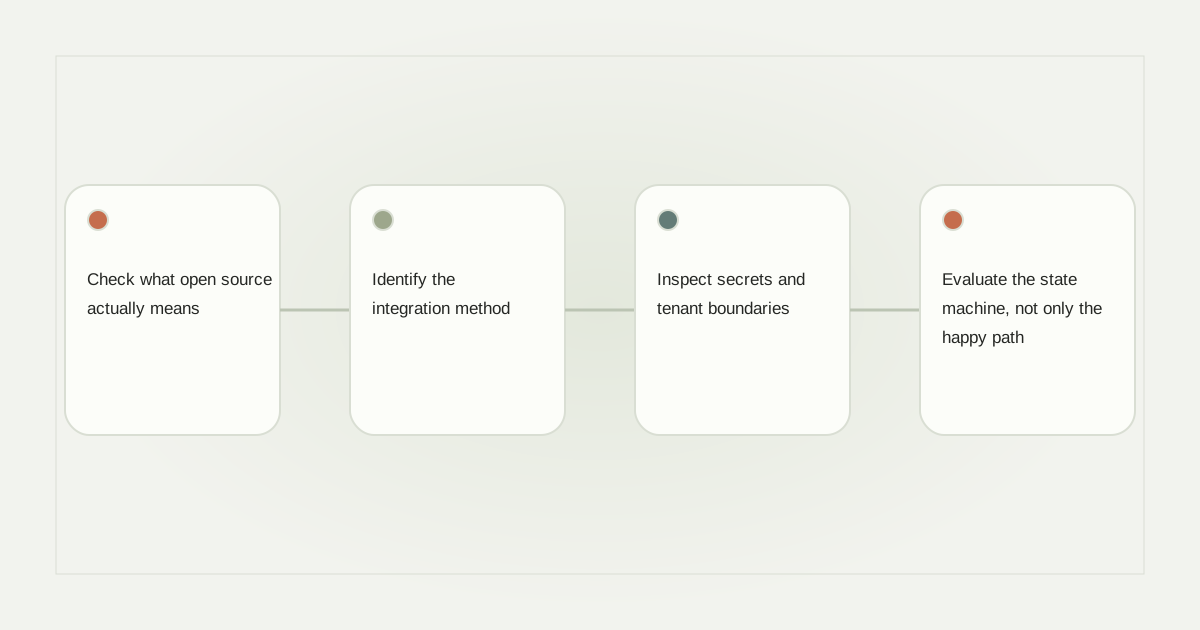
Check what open source actually means
A publicly visible repository is not automatically licensed for every use. Read the license, any additional terms and the project’s dependency notices. The Open Source Initiative definition explains the broader licensing concept; it is not a substitute for checking a specific project.
Ask who can maintain the code if the original author stops updating it. A project with a small number of contributors may still be useful, but your operational plan should not depend on an unverified assumption that volunteer support will respond during a business incident.
Identify the integration method
Look for a documented official authorization flow and API context. Distinguish that from browser automation that asks for a password, replays private interfaces or scrapes follower lists. Open code can make an implementation easier to inspect; it does not make every implementation appropriate.
Create a short architecture note: incoming event source, signature validation, account mapping, durable storage and outbound endpoint. If those elements are hidden behind unexplained scripts or copied credentials, stop the evaluation until somebody can explain them.
Inspect secrets and tenant boundaries
Review how credentials are stored, encrypted where appropriate, rotated and removed. Check whether logs expose authorization headers or message contents. An example configuration should contain placeholders, not real tokens from a maintainer’s account.
For a multi-account deployment, test that every query and job is scoped correctly. A workspace identifier supplied by the browser is not sufficient authorization. Separate customer access, exports and operational dashboards so one user cannot inspect another account’s conversation or credentials.
Evaluate the state machine, not only the happy path
A demo may receive one event and send one message correctly. Production also needs duplicate handling, expired jobs, rate-limit responses, uncertain provider outcomes and a reliable stop mechanism. Ask what persists when the process restarts.
Read the code around a send attempt. If every exception simply triggers another send, the design needs closer review. A timeout can leave uncertainty about provider acceptance. Durable records and cautious recovery are more useful than a large retry count.
Prepare maintenance before launch
Assign a person to dependency updates, provider API changes, backups and incident response. Test restoration into an isolated environment instead of assuming a backup file proves recoverability. Keep deployment rollback separate from data recovery; reverting code does not undo a message already accepted by a provider.
Use the workflow orchestration guide for a related operating model and the API buyer checklist when evaluating the underlying permissions. These responsibilities exist even when the software license has no purchase price.
Make a build-versus-buy decision with evidence
Compare team time, hosting, support coverage and the specific enabled workflow. Do not call a project free if it creates an operating responsibility you have not costed. The budget guide offers a practical worksheet. RelayDM’s published availability must also be assessed honestly; a managed interface does not imply unrestricted customer sending.
Sources and editorial notes
Source review: November 1, 2026. This is research-based guidance, not an independent hands-on test of every product. Prices and permissions can change.
- Open Source Initiative: Open Source Definition
- Meta Instagram API with Instagram Login
- n8n hosting documentation
Read our methodology, product-availability policy and corrections process.