 RelayDM
n8n can coordinate HTTP requests and business logic, but an n8n workflow does not grant Instagram API permission. A responsible Instagram DM automation design starts with authorized account access and a supported recipient interaction, then addresses secrets, durable work, retries and operational ownership. This is an evaluation framework, not a tutorial for scraping accounts or sending cold messages.
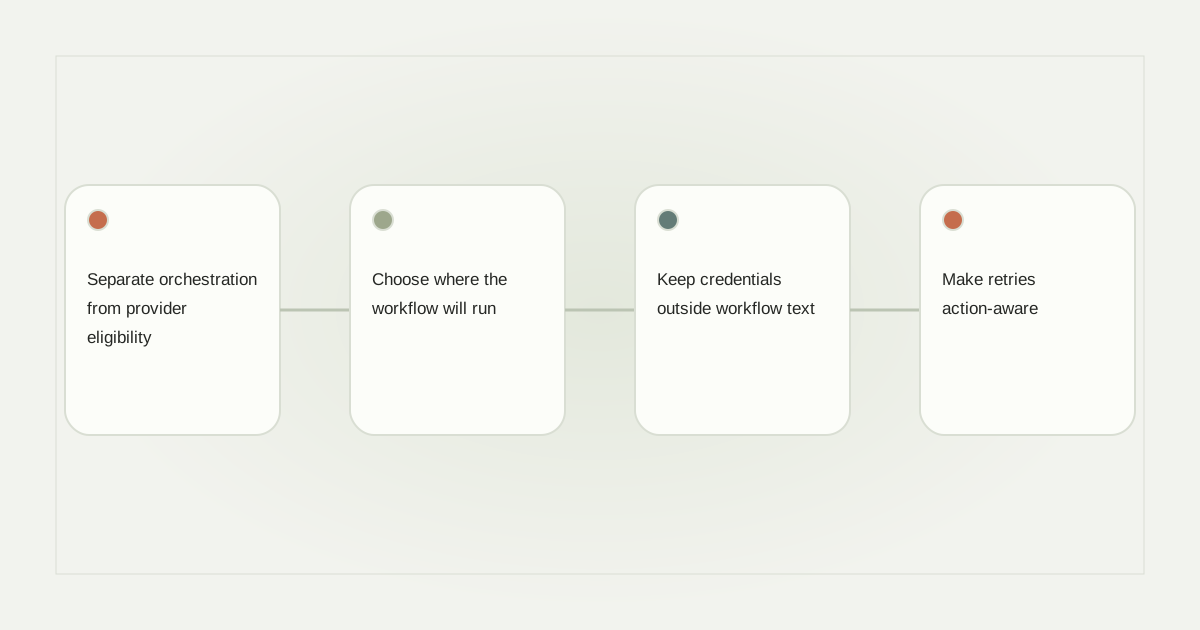
Separate orchestration from provider eligibility
Write down the operation you want before adding nodes. Receiving a signed comment event, sending an eligible private reply and checking a messaging participant’s profile are different operations. A generic HTTP node can construct requests; it cannot make an unsupported operation legitimate.
Read Meta’s current documentation for the exact account and application context. Do not copy a workflow containing somebody else’s app credentials or assume that an example developed for an owned account qualifies an application to serve unrelated customer accounts.
Choose where the workflow will run
Cloud-hosted and self-hosted orchestration have different operational responsibilities. If you self-host, assign ownership for upgrades, backups, uptime and access management. The official n8n hosting documentation should inform that decision.
A workflow that works while a developer watches it is not necessarily reliable overnight. Document how events are accepted during downtime and how the system determines whether work is complete. Avoid using an open browser tab as the only place where recovery state exists.
Keep credentials outside workflow text
Use the platform’s documented credential facilities and restrict who can inspect or export them. Do not place access tokens in a destination URL, spreadsheet cell, screenshot or public workflow repository. The HTTP Request documentation describes authentication configuration separately from request bodies.
Review execution logs and error payloads for accidental disclosure. A provider error can include request details that should not be forwarded unchanged into a team chat. Keep safe correlation references while protecting credentials and unnecessary recipient content.
Make retries action-aware
A failed read-only lookup and an uncertain message send need different retry policies. If the request may have reached Meta, a generic retry node can produce duplicate messages. Preserve an attempt record and reconcile what is known before permitting another send.
For inbound events, use a stable event reference to avoid creating independent work for repeated webhook deliveries. Store state durably and define what happens when a process stops between claiming a job and receiving a provider response. These controls require design; connecting boxes on a canvas does not supply them automatically.
Enforce rules immediately before sending
Recheck account authorization, recipient context, messaging-window eligibility and your own stop controls at the actual send boundary. An event that was eligible when received may become ineligible while waiting. A revoked campaign must not continue simply because a job was queued earlier.
Use a permitted test environment first. Validate duplicate events, timeouts, expired credentials and emergency shutdown without creating real messages unnecessarily. The stage diagnosis guide and open-source operations checklist provide complementary questions.
Budget for operating the workflow
Include maintenance and incident response, not only the subscription or server bill. Compare that responsibility with a managed tool using the automation cost framework. RelayDM does not claim a public n8n connector here; check its current availability and keep unqualified delivery paths disabled.
Sources and editorial notes
Source review: November 1, 2026. This is research-based guidance, not an independent hands-on test of every product. Prices and permissions can change.
Read our methodology, product-availability policy and corrections process.