 RelayDM
Instagram automation for marketing agencies introduces a problem beyond writing good messages: every campaign belongs to a client with its own account, approvals and data. A convenient agency workflow must not blur those boundaries. Design the operating process so a contractor can work efficiently without gaining authority over unrelated clients or financial settings.
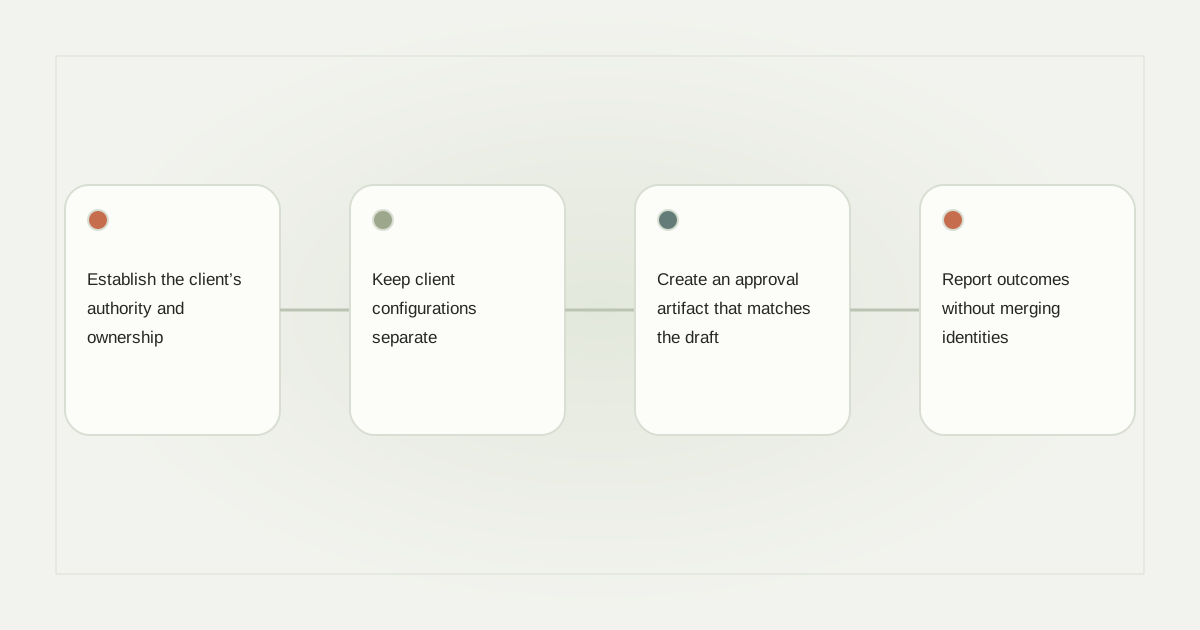
Establish the client’s authority and ownership
Before connecting a professional account, identify who owns it and who is authorized to approve integration access. Use the provider’s legitimate authorization process. Do not ask a client to send a password, session cookie or access token through a project chat.
Document who can reconnect or remove access when staff change. An agency relationship is not permanent ownership of the client’s audience or records. If the platform uses separate workspaces, check the current association rather than relying on a familiar Instagram username.
Keep client configurations separate
A restaurant menu rule and a consultant’s guide campaign can use the same keyword without belonging to the same workflow. Isolate account selection, post identifiers, destinations and recipient records. Copying a draft should not copy another client’s connected account or sending authorization.
When evaluating Instagram tools for agencies, test permissions with a limited team role. Can that person see only the intended client? Can they export leads, publish campaigns or change billing? A broad administrator account is not a substitute for an intentional access policy.
Create an approval artifact that matches the draft
Record the approved post, keyword, messages, button labels, resource URL and public reply. If the draft changes after signoff, the approval should not silently apply to a materially different campaign. Keep sensitive client information out of screenshot galleries used for broader review.
Comment automation for social media agencies needs a launch owner and stop owner. Decide who pauses a campaign if the destination fails or the client reports a complaint. A pleasant preview does not establish that native buttons, follow checks or reminders are qualified for that connection.
Report outcomes without merging identities
Separate requests, provider-accepted sends, recipient interactions, resource visits and actual client conversions. Use definitions that the client can understand. Do not compare one client’s raw message count with another’s lead count as if they measured the same result.
Instagram lead generation for marketing agencies also requires disciplined exports. Give a client its own authorized records, not a combined spreadsheet containing every campaign. Review access before sharing a report, especially when contractors serve several businesses from one device.
Plan offboarding before onboarding
At the end of an engagement, pause or transfer management through supported controls, resolve pending work and revoke staff access appropriately. Preserve the client’s records according to the agreed process. Do not delete campaigns to make a workspace look tidy without authorization.
RelayDM does not imply unrestricted customer sending or white-label agency operation through this guide. General delivery remains gated. Check actual role support, account limits and commercial availability before choosing Instagram automation for social media agencies at scale.
A practical approval record can be short: client, account, post, draft version, approver and time. Its value comes from matching the actual configuration. A screenshot of yesterday’s editor is weak evidence if the destination or message has since changed without another review.
Use the event ownership guide and safe pause checklist in agency procedures. See RelayDM’s actual plan limits rather than assuming agency features.
Sources and editorial notes
Source review: November 1, 2026. This is research-based guidance, not an independent hands-on test of every product. Prices and permissions can change.
Read our methodology, product-availability policy and corrections process.