 RelayDM
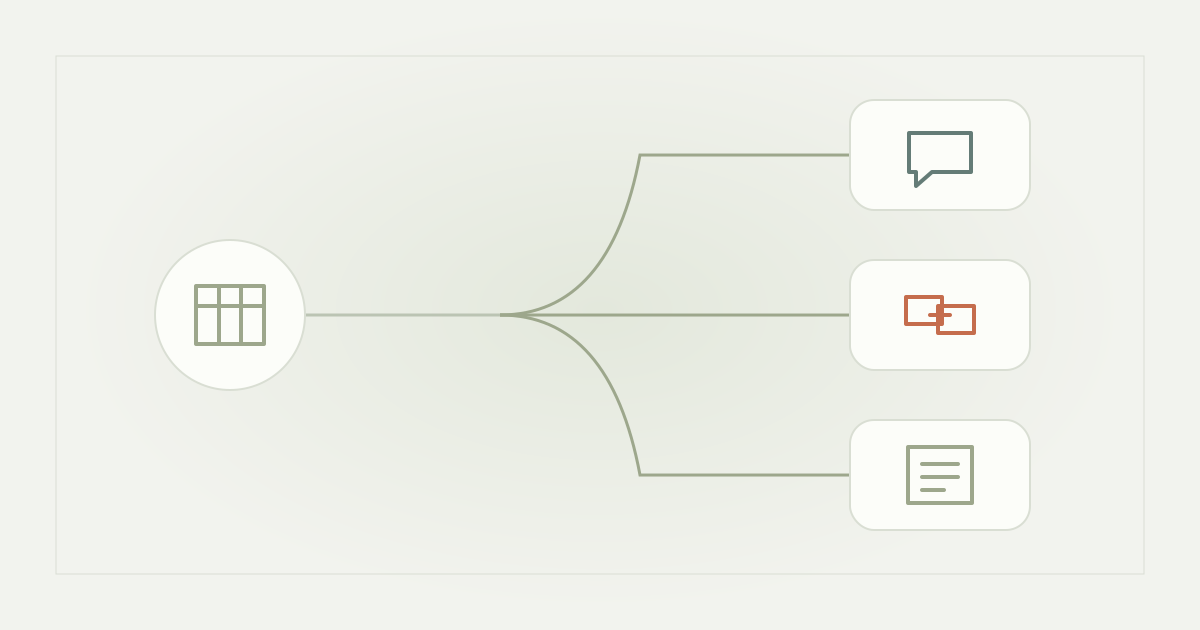
Instagram auto replies work best when they answer the immediate question and set an honest expectation. A public acknowledgement, an inbox response and a resource delivery are different jobs. Choose copy for the job that actually happened instead of pasting “Sent!” into every interaction.
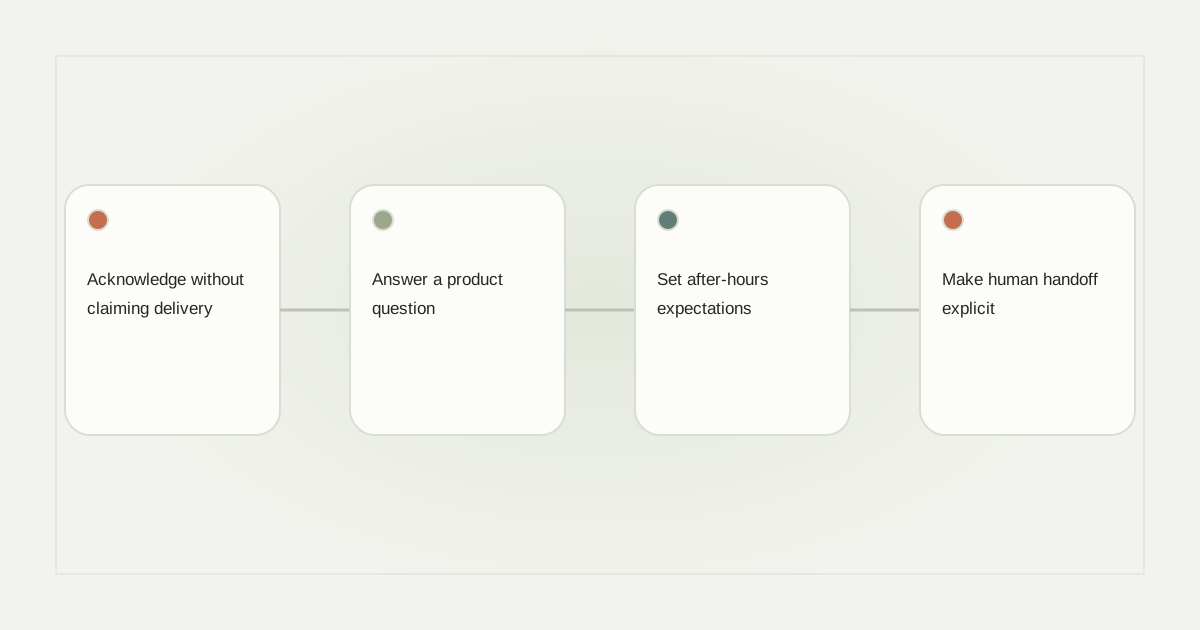
Acknowledge without claiming delivery
If the system has only received a request, “Thanks for requesting the size guide” is accurate. “Your guide is in your inbox” should be reserved for a workflow that can support that statement. Even a provider-accepted message does not prove someone has read it, and it may appear in Requests.
For public replies, avoid asking people to expose personal details. “Please check your private messages for the next step” is preferable to “Reply here with your phone number.” Use the smallest amount of public information needed to guide the customer.
Answer a product question
Suppose a ceramics shop repeatedly receives “Is this dishwasher safe?” A useful response points to the care instructions for that exact range, then explains how to ask about a different item. It should not apply a generic safety claim to every product in the catalogue.
Example: “For the blue stoneware collection, the care page explains cleaning and use. Which item are you considering?” A supported resource action could read “Read care instructions.” If stock or specifications change, update the source page rather than scattering inconsistent facts across many templates.
Set after-hours expectations
An after-hours response should distinguish acknowledgement from a staffed reply. “Thanks for your message. Our team reviews enquiries on working days” is more defensible than “We will reply in five minutes” when nobody is monitoring the inbox. Add a specific timetable only if the team maintains it.
For time-sensitive order problems, direct people to the proper support channel. Do not ask for full payment information in a DM. A short message can explain which reference is useful and which details should remain private, without turning the conversation into a long form.
Make human handoff explicit
When someone writes “That link is broken,” do not repeat the same link indefinitely. A better response is: “Thanks for flagging it. Tell us which resource you were opening and we will check.” If the automation cannot identify the resource safely, stop that branch and assign it to a person.
Keep the owner of the handoff clear. One team member should know whether a conversation is waiting, assigned or resolved. Automation that acknowledges an issue but leaves it unowned can create a worse experience than a slower, clearly human reply.
Choose variants for clarity, not disguise
Short alternatives such as “Thanks for your interest” and “Your request is noted” can suit different contexts. Do not promise random rotation unless your product actually supports it. Variation should preserve meaning; “Sent” and “Ready to send” are not interchangeable descriptions of delivery.
Test the public and private copy together with a hypothetical recipient who never responds, one who asks a different question and one who chooses to stop. Review our resource-message templates and comment-reply guide for the next step.
Meta’s official private-reply documentation provides the platform boundary. RelayDM’s configuration screens do not make every outbound workflow publicly available. Check product availability before treating a polished preview as a live campaign.
Sources and editorial notes
Source review: November 1, 2026. This is research-based guidance, not an independent hands-on test of every product. Prices and permissions can change.
Read our methodology, product-availability policy and corrections process.