 RelayDM
“Comment and I’ll DM you” usually means a creator is offering to send information privately after a public request. For example, commenting RECIPE may request a cooking guide. The private response can be sent by a person or an eligible automation; the phrase alone does not tell you which system is involved.
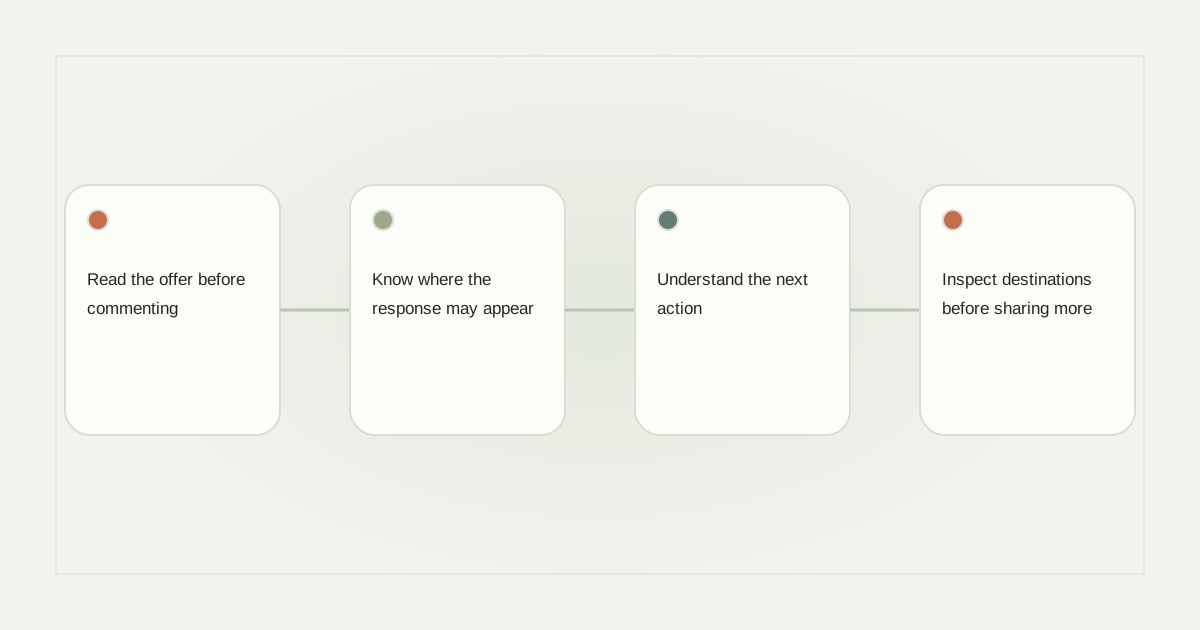
Read the offer before commenting
Check what the creator says you will receive. Is it a free checklist, a sample, product information or a paid offer? A keyword is a convenient signal, but it should not hide the actual terms. If a post promises a guide and the destination unexpectedly asks for payment, pause and review the explanation.
You do not need to post a phone number, email address or personal situation publicly just to ask what an offer means. A clear request can usually name the resource without disclosing unrelated information in the comment thread.
Know where the response may appear
A requested private reply may appear in the main inbox or a message-request area depending on the relationship and Instagram’s interface. Meta’s private-reply documentation notes the Requests behavior for recipients who do not follow the professional account. Exact app labels can change.
Check the appropriate account and the time of your request. If nothing arrives, do not immediately repeat the same comment several times. The creator may have a delivery issue, a paused workflow or a resource that no longer applies.
Understand the next action
An opening message may ask you to reply or use a supported button before sending a resource. The action should describe what happens next, such as “Send the guide.” A website button, in contrast, opens a destination.
Do not assume that a button labeled “I followed” independently proves a relationship. Where a follow condition is genuinely implemented, a system needs a real eligible check. If the result is unavailable, the creator should not invent success or demand endless repeated clicks.
Inspect destinations before sharing more
Check that the link corresponds to the resource and expected creator or business. An encrypted connection does not by itself prove that a destination is trustworthy. Be cautious about unexpected login screens, requests for account recovery codes or instructions to send payment credentials in a message.
A resource may legitimately require registration if that was clearly disclosed. Decide whether you accept that step. A request for a guide does not mean you must consent to unrelated marketing or share information that was not part of the offer.
Ask for help without amplifying private details
If a link fails, contact the creator through an established route and describe the resource and approximate request time. Do not publicly paste a private access link, personal address or security code. A screenshot can contain more information than you intend to share.
The creator can use a proper recovery process instead of asking you to repeat the interaction indefinitely. See the delivery recovery checklist for the operational side and optional email requests for a later choice.
Keep the promise and the product distinct
The workflow is explained in the comment-to-link guide. Not every creator uses RelayDM, and this article is not proof that any particular campaign is enabled. RelayDM’s own current availability includes customer sending restrictions. Judge an individual offer by its clear terms, actual response and trustworthy destination.
Sources and editorial notes
Source review: November 1, 2026. This is research-based guidance, not an independent hands-on test of every product. Prices and permissions can change.
Read our methodology, product-availability policy and corrections process.